Plenilunio
the full moon on still water
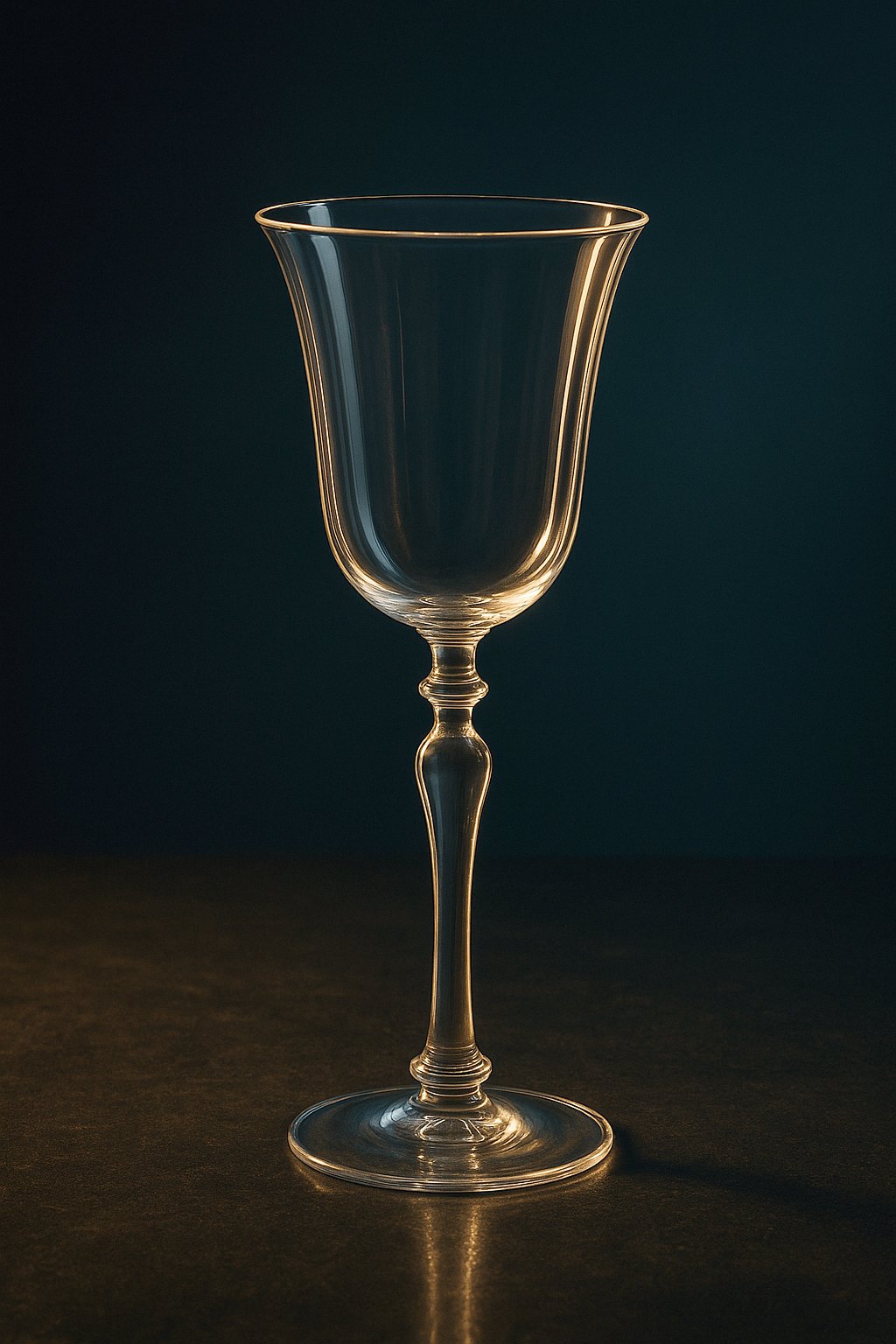
Cristallo blown to a breath — sand from Fontainebleau, manganese against the green — with a baluster stem drawn in one pull. The bowl weighs less than the wine it holds. In the oven tonight; cold by morning.
Fornace alla Luna · Murano
One furnace at the sign of the moon, on Fondamenta Serenella since 1861. The composizione melts at midnight; the piazza blows before dawn; nine commissions leave the fondamenta each year.
Fondamenta Serenella, Murano
The house · since 1861
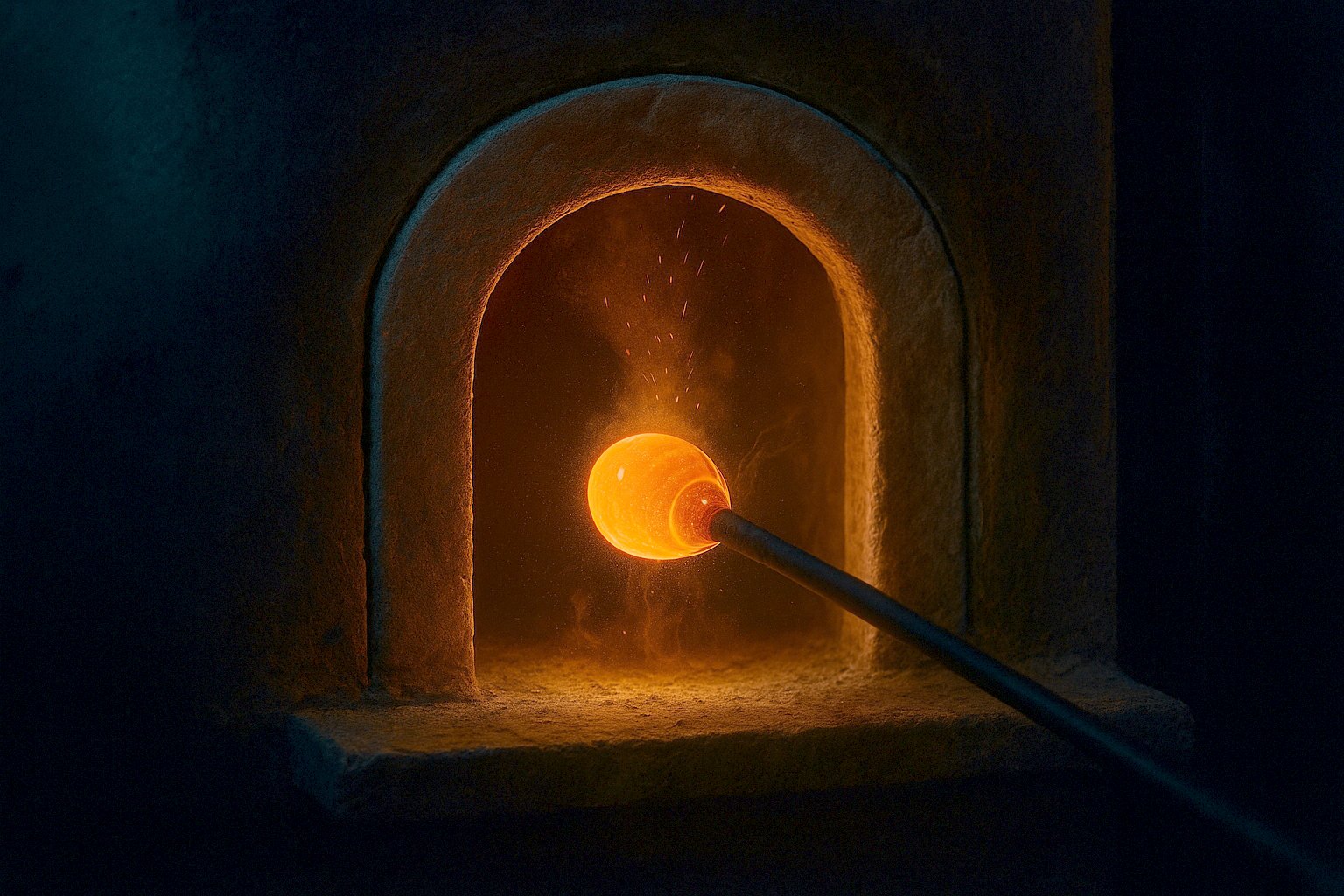
Murano’s furnaces were once known by the sign over the door — the mermaid, the moor, the moon. This one took the moon, because its work is nocturnal: the batch — sand, soda, lime, manganese against the green — goes into the three crucibles (crogioli) at midnight and melts while the island sleeps. By five the glass is ready, and the piazza works it until it is gone.
Fondamenta Serenella. Six masters of the name Businello, father to son to son.
One fire, never divided. It goes cold once a year, in August — la sosta — for the rebuilding of the crucibles.
A year — goblets only. A service of twelve takes the piazza six weeks.
La Piazza
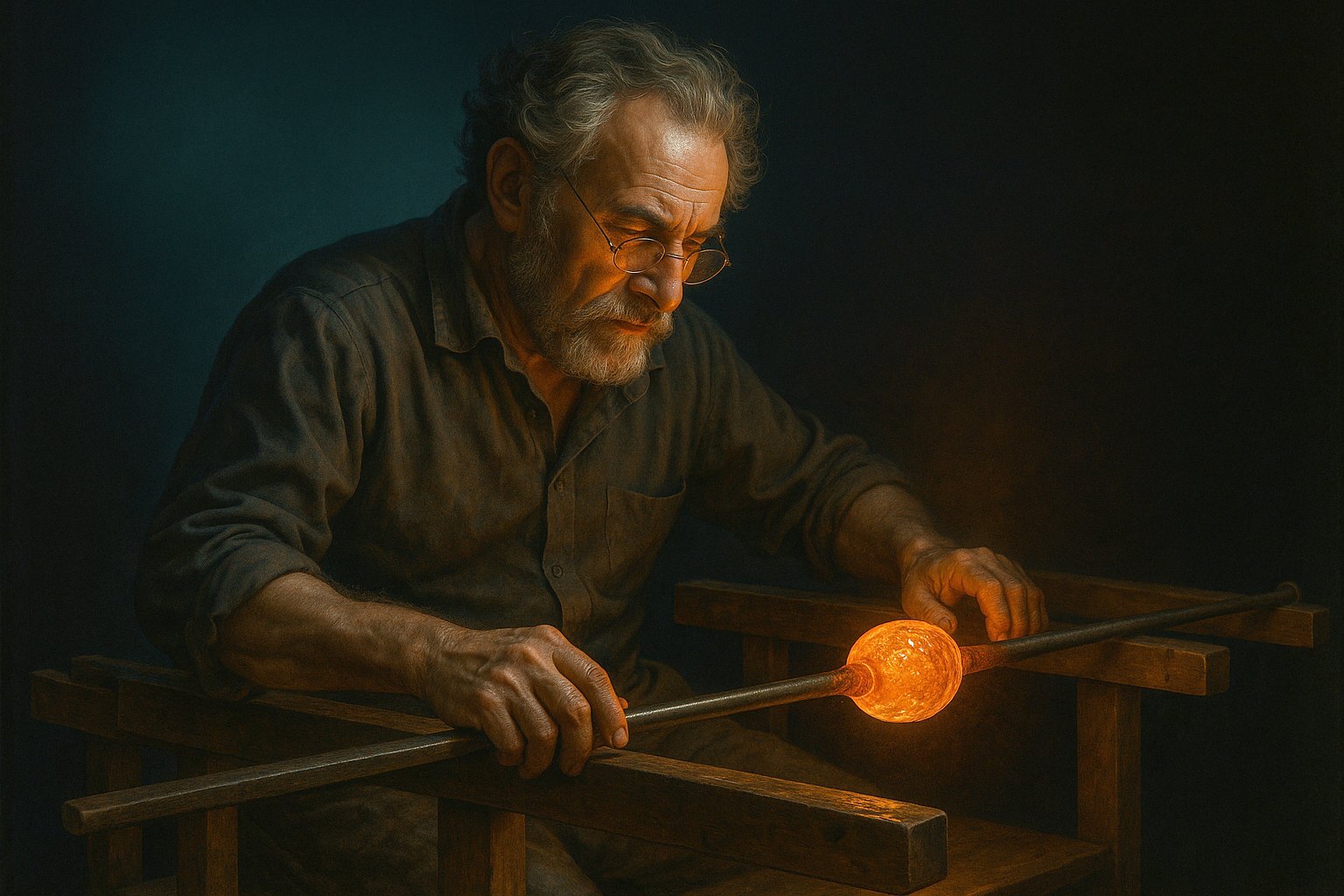
The crew around a maestro has been called apiazza on this island for five hundred years. Ours is four: the glass passes from the garzone’s gather to the serventi’s shaping to the maestro’s bench — thescagno — and back, and no one speaks, because at 900 degrees the glass does not wait for sentences.
La Tempera
Annealing is not waiting. It is the half of the craft that happens without hands: the day’s work enters thetempera at 480 degrees and comes down to the morning air no faster than the glass forgives. Below — the day’s last goblet, cooling into the Archive.
cold, clear, and finished — it will not change again.
Entered into the Archive
L’Archivio
The Libro dei Modelli has been kept since 1861; a design’s number is its name in the house. Three pages are open this season.
the full moon on still water
Cristallo blown to a breath — sand from Fontainebleau, manganese against the green — with a baluster stem drawn in one pull. The bowl weighs less than the wine it holds. In the oven tonight; cold by morning.
the tide that enters the house
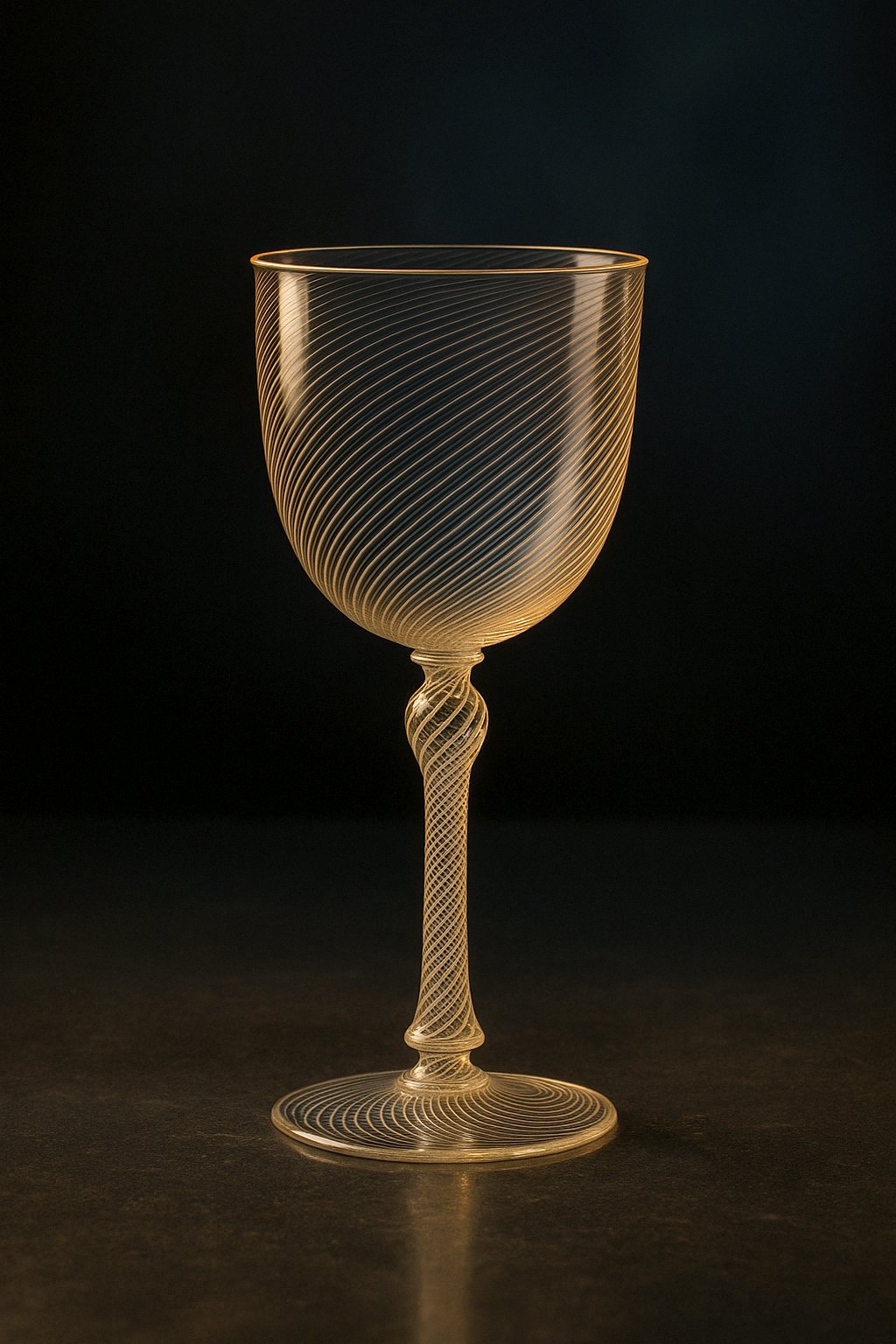
Thirty-two canes of lattimolaid on the marver, fused, and twisted through bowl and stem —filigrana as the tide leaves lines on stone. A service of twelve, promised to a table in Turin; the last four goblets are blown this month.
the fog that closes the lagoon
A service of eight in lattimoveiled over cristallo, blown in the winter of 2023 and gone from the fondamenta since. Its page in the model book stays open; the house can blow it again only for the same table.
El Goto
Every evening the day’s last glass is blown for the bench, not the Archive: el goto, the worker’s own cup, made of whatever the crucible still holds. No two alike; none for sale; every one drunk from.
Under the foot of every goblet is the scar of the pontil, ground smooth but never erased. And within a service of twelve, no two goblets agree closer than a breath. This is not tolerance; it is authorship. Glass remembers fire — and the hand.
La Commissione
A commission begins with a letter: what the table is, how many will sit at it, what will be poured. The maestro answers within the week — in August, when the furnace is cold, letters wait for September. Nine commissions leave the fondamenta each year; the tenth letter is answered with a date.
Write to the furnaceThe furnace receives visitors by appointment, Tuesday to Friday, from five in the morning — the glass is best before Venice wakes.